Hi Phil.
-the science diva
Monday, February 06, 2017

Tuesday, December 16, 2008
profile 13: dionicio siegel
so we have another university of texas chemist. oh, phil, you're slowly being replaced in my heart with sexy chemists as this guy is a new professor and i got at least seven nominations. i have to say, omnomnomnom. yummy!
dionicio siegel

he's a natural products chemist and is a harvard alum. sexy in mind and in body. from what i hear, the girl grad students at UT are goo-goo gaa-gaa over prof. mcdreamy,and well, i would be too.
here's his research description, fortunately it's short
=====================================================================================
Reaction Development, Natural Product Synthesis, and Medicinal Chemistry
Natural products are the cornerstone of our group. Within the broad study of natural products chemistry there are three primary areas of inquiry; total synthesis, reaction development, and molecular pharmacology. Typical targets selected for total synthesis possess structures that, from a synthetic chemistry point of view, have atom connectively challenges. In addressing these challenges within specific targets, inspiration may be gained for new synthetic methods. Our goal is to develop new methods to compliment and improve upon existing reactions. Accordingly, emphasis is placed on the development of reactions that are generally applicable to synthesis, as it is most broadly defined. The second area of focus and inquiry in our group is the study of natural products that are biologically relevant in selected fields of biology and medicine. Through interdisciplinary collaborations, we will study optimization of the biological performance and/or investigation into the mechanism action of the natural products prepared in our laboratory. Information gained through these collaborations will determine the future direction of the projects undertaken.
=====================================================================================
that's nice and good for him, but here's a few more pictures. yummy. just wow. hotness. i wish i were a natural products chemist.

prof. siegel is in back row to the right.. mmmmm.
so, of course, he's a habanero. delicious, hot and spicy. rawr!
dionicio siegel
he's a natural products chemist and is a harvard alum. sexy in mind and in body. from what i hear, the girl grad students at UT are goo-goo gaa-gaa over prof. mcdreamy,and well, i would be too.
here's his research description, fortunately it's short
=====================================================================================
Reaction Development, Natural Product Synthesis, and Medicinal Chemistry
Natural products are the cornerstone of our group. Within the broad study of natural products chemistry there are three primary areas of inquiry; total synthesis, reaction development, and molecular pharmacology. Typical targets selected for total synthesis possess structures that, from a synthetic chemistry point of view, have atom connectively challenges. In addressing these challenges within specific targets, inspiration may be gained for new synthetic methods. Our goal is to develop new methods to compliment and improve upon existing reactions. Accordingly, emphasis is placed on the development of reactions that are generally applicable to synthesis, as it is most broadly defined. The second area of focus and inquiry in our group is the study of natural products that are biologically relevant in selected fields of biology and medicine. Through interdisciplinary collaborations, we will study optimization of the biological performance and/or investigation into the mechanism action of the natural products prepared in our laboratory. Information gained through these collaborations will determine the future direction of the projects undertaken.
=====================================================================================
that's nice and good for him, but here's a few more pictures. yummy. just wow. hotness. i wish i were a natural products chemist.
prof. siegel is in back row to the right.. mmmmm.
so, of course, he's a habanero. delicious, hot and spicy. rawr!
Thursday, December 11, 2008
profile 12: michael krische

so i realize i have a thing for organikers. this one was nominated by kristy before, and well, i can see why. he has that smug almost cocky grin, which is well, quite sexy actually. i've been looking through his work, and well it's an impressive body of work. he's a welch professor of chemistry at the university of texas at austin, and has won numerous awards. he does green chemistry, and considering i like the environment, that adds sexyness points i think. he worked for barry trost from stanford, so his academic 'family' is quite impressive. he probably has the same work ethic too. regan jones, one of the featured graduate students from grad set 1, way back in 2006 is in his group, so i dont know why i didnt feature prof. krische before. either way, enjoy. i think he's hot ;)
-------------------------------------------------------------------------------------
Natural Product Synthesis, Catalytic Reaction Development, Organometallic Chemistry and Self-Assembly
Our research focuses on catalytic reaction development with attendant applications in natural product synthesis. A central theme involves the identification of new reactivity patterns, the evolution of related catalytic processes and, ultimately, the development of new synthetic strategies. Specific areas of research include: (a) hydrogen-mediated C-C bond formation, (b) nucleophilic catalysis via phosphine conjugate addition, (c) catalytic tandem conjugate addition-electrophilic trapping, and (d) metal-catalyzed [2+2]cycloaddition.
H2-Mediated C-C Bond Formation: The formation of carbon-carbon (C-C) bonds is of fundamental significance. Research in the Krische laboratory demonstrates that C-C bond formation may be achieved under the conditions of catalytic hydrogenation and transfer hydrogenation. These studies represent the first systematic efforts to exploit hydrogenation in C-C couplings beyond hydroformylation and define a departure from the use of preformed organometallic reagents in carbonyl addition.
The Krische group reports that diverse π-unsaturated reactants reductively couple to carbonyl compounds and imines under hydrogenation conditions, thereby providing a byproduct-free alternative to stoichiometrically preformed organometallic reagents in a range of classical C=X (X = O, NR) addition processes. In such transformations, one simply hydrogenates two molecules in the presence of one another to form a single more complex product. This work evokes the question of whether all processes employing stoichiometric metallic reagents can be conducted catalytically under hydrogenative conditions.
More recently, by exploiting alcohols as both hydrogen donors and aldehyde precursors, byproduct-free carbonyl addition is achieved from the alcohol oxidation level. Such alcohol-unsaturate C-C couplings circumvent the redox manipulations often required to convert alcohols to aldehydes, and again bypass the barriers imposed by the use of stoichiometrically preformed organometallics. As chemical industry shifts from petrochemicals to renewable feedstocks, such direct byproduct-free couplings of alcohols are anticipated to find broad use.
-------------------------------------------------------------------------------------
he's a natural products chemist too! oh phil, i think someone else is taking your spot, but who am i kidding..you're the natty products chemist for me. krische is close though ;)
the women of science: set 2
okay, since i've received so many nominations, i'm separating them out by school. so far, northwestern is in the lead, but i've received a bunch of nominations from the university of california - santa barbara. with the beautiful weather and the amazing chemistry and materials science department, i hope these women continue to be good examples for all the girls out there who want to join one of the STEM fields. again, these were from nominations that i got in my backlog of emails, so i hope they've moved on to bigger and better things.
university of california - santa barbara
1) miyako hisamoto of the scott group

2) ying-jen wang-lee of the scott group

3) megan grabenauer of the bowers group
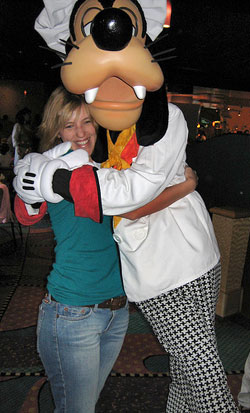
4) vanessa homan of the butler group

5) julia vraspir of the butler group

and there we go. we have one postdoc amongst the group. but i do hope that these women become good role models for younger girls. awesome job, ladies!
university of california - santa barbara
1) miyako hisamoto of the scott group
2) ying-jen wang-lee of the scott group
3) megan grabenauer of the bowers group
4) vanessa homan of the butler group
5) julia vraspir of the butler group
and there we go. we have one postdoc amongst the group. but i do hope that these women become good role models for younger girls. awesome job, ladies!
the women of science: set 1
so i was looking through various emails, and i got a lot of potential future babes of science. i have to say girl power. i cant really objectify these women, but these women are to be admired for their pursuit of higher education and in science. girls, you have to look up to these women. they're strong, confident and beautiful. good job girlies!
so guys, you can objectify them if you want, but i honestly cant. i know, double standard, but hey, at least i'm giving you guys something. these are from nominations i've received via email.
the babes of northwestern university
1) allison harney of the meade group

2) renee cilliers of the meade group

3) lindsay karfield of the meade group

4) roxanne atienza of the scheidt group

5) erika crane of the scheidt group

there we go. i hope all of these women become professors. we have three biochemists and two organic chemists. these are both difficult fields. a mixture of undergrads and grad students nominated these beautiful, strong women. you all definitely had an influence on your students. good job and keep up the great work!
so guys, you can objectify them if you want, but i honestly cant. i know, double standard, but hey, at least i'm giving you guys something. these are from nominations i've received via email.
the babes of northwestern university
1) allison harney of the meade group
2) renee cilliers of the meade group
3) lindsay karfield of the meade group
4) roxanne atienza of the scheidt group
5) erika crane of the scheidt group
there we go. i hope all of these women become professors. we have three biochemists and two organic chemists. these are both difficult fields. a mixture of undergrads and grad students nominated these beautiful, strong women. you all definitely had an influence on your students. good job and keep up the great work!
Wednesday, December 10, 2008
profile 11: thomas hertog

I know I typically cover chemists, since I'm a chemist, but this one is well, special. This is Thomas Hertog, a former student of Stephen Hawking. Yes, his advisor was /THE STEPHEN HAWKING/, and he's now a professor. He's a physicist, and a theoretical physicist at that. This deals with the incredibly complex, and mindboggling, at least from my mind. I can do mechanics and electrodynamics but this goes beyond anything I've ever known, so for that, just wow.
This guy is intellectually hot. From what I've read, he delves into m-theory and is going into how the universe began. He and Stephen Hawking wrote a paper in Physical Review (which letter, I dunno), that argues the universe "began in just about every way imaginable" at the same time. The paper is, beyond me, but it's really interesting.
Here's the link to a Nature 'dumbed' down version of the paper: http://www.nature.com/news/2006/060619/full/news060619-6.html
I dont know what he's up to now, but for all that he's done, he's definitely a HABANERO.

post 10: neil branda

Neil Branda. I typically dont go to professors up North, but this one was sent a LONG time ago,by one of my readers, Cari. I have to say, just wow. He's an organic chemist, and it really makes me wish I went that route now. Oh well, too late, but here's a little about Prof. Branda. From reading about him and a few of his papers, he's quite an accomplished chemist, which of course just makes things even sexier. Not only is he physically attractive, but he's quite intellectually attractive as well. Le sigh.
Prof. Branda is a professor at Simon Fraser University, and he's the executive director of 4D labs, and the CTO of Switch Materials, a company he founded to commercialize his research. From what I've read, he's a Mirkin of Canada, considering he's also the founder and director of the Nanomed Canada Research Network, using nanotechnology for medicinal purposes (he is a Canadian Chad Mirkin!). Other honors include being one of Canada's Top 40 under 40, a 2005 NSERC Steacie Fellow and a Canada Research Chair in Materials Science. Basically, he's very accomplished, which adds hotness points from the intellectual side. So here's a press release I found not too long ago about him..
-------------------------------------------------------------------------------------------------
His research program lies at the interface of organic chemistry and materials science with a focus on designing and synthesizing molecular switches – molecules that change their structure and function when triggered with light, electricity or chemical stimuli. we work closely with materials scientists and the medical research community to deliver unprecedented designer photoswitches to solve practical challenges in molecular photonics, electronics, therapeutics and diagnostics. His research program involves integrating photo- and electro-responsive molecules into digital data storage systems, synthetic reagents and catalysts, sensors and dosimeters and drug delivery systems, using light as a trigger to selectively unmask known drug architectures as well as using optics to control important metabolic intermediates and enzyme cofactors.
His ability to shift shapes sounds like the stuff of science fiction. In real science, though, Neil Branda's cutting edge ability to manipulate molecules has made him the first researcher at Simon Fraser University to earn a Steacie Fellowship - one of Canada's premier science and engineering prizes.
The Natural Sciences and Engineering Research Council (NSERC) awards only six of the fellowships nationally. They go to outstanding Canadian university scientists or engineers whose research has earned them an international reputation early in their careers.
Branda's fellowship has earned him an $114,000 annual supplement for two years to top up a five-year, $60,500 annual NSERC Discovery grant, which is nearing expiration. “This award provides me with a unique opportunity to devote the next two years of my life to exploring how molecular manipulation can benefit health sciences, specifically drug delivery in treating prostate cancer,” says Branda.
Within 11 years of earning his doctorate, Branda has become a Canada Research Chair in materials science and director of molecular systems for SFU's new research centre, 4D Labs. He has learned how to reversibly change the shape, structure and function of molecules - the building blocks of life - on command, and use colour to signal their change. In collaboration with other researchers at SFU and Vancouver General Hospital, Branda is preparing to do tissue experiments. They will identify how light, electricity, and other environmental stimuli can trigger structural changes in molecules and influence their interaction.
“In biology, molecular shape is everything,” says Branda. “Molecular interaction is based on complementary shapes that fit together like a lock and key system. If we can change and control the shape of molecules then we can pre-program molecular interactions to better deliver drugs to a targeted area in the human body. Ultimately, our goal would be to deactivate or alter disease producing molecular interactions.”
“When I recruited Neil four years ago, I believed he was an individual of high enough calibre to secure the Steacie,” says Mario Pinto, VP-research. “The recipe for success at SFU is having the foresight and courage to recruit aggressively individuals more innovative than ourselves, and Neil is such a person.”
The Steacie fellowships are named in honour of Edgar Steacie, a physical chemist and National Research Council president from 1952 to 1962. The awards ($180,000 over two years or $60,000 for Canada Research Chair recipients) are coveted for their prestige and their ability to leverage more funding. Steacie awards enable universities to hire teaching and administrative relief so that the recipients can focus on their research.
------------------------------------------------------------------------------------------------
Really impressive huh. So, on the intellectual and on the hotness, he's a HABANERO!
Gotta Catch 'Em All: Grad Student Set 2
so it's been a while since I've put up anything, but after looking through the emails that have been in my sciencediva backlog, these are the best and sexiest grad students that I have seen. So, let's start with double your pleasure, double your fun.
Tied for #1 - Aaron and Wes Sattler, Columbia University
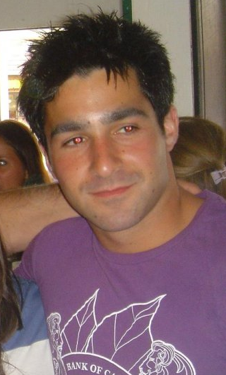
They're first years in the Parkin group at Columbia. Makes me wish I went to Columbia now. I know the Parkin group works on bioinorganic chemistry, and as an inorganic chemist, I love that. Good job to Columbia for recruiting these hotties.
3) Dave Fratarelli, Northwestern University

This one was sent to me not too long ago. All I have to say is wow. Northwestern has some hotties. According to my sources, he in the Marks Solid State subgroup. The picture has some sort of laser setup, and lasers are sexy. Definitely bonus points. He could've overtaken the Sattlers, but they have more bonus points for being twins..in chemistry..getting their PhDs.
4) Kevin Kells from Wayne State University

Kevin is part the Rigby Group at Wayne State University. He's actually a postdoc, but I'll lump him with the grad students since he was one not too long ago. He's Canadian too, like our dear Christopher Graves from Grad Student Set 1. He was sent in by a daring undergrad who shall remain nameless, but mad props girlie. This typically isnt seen that much, but they work on natural products synthesis. Damnit, I knew I should've become a total synthesis kinda gal, but alas. I will just have to marry one of these organikers :P
I've mostly gotten professors, so I'll get to that after I read through my huge backlog of emails. But ladies, these guys are PhDs, or at least they're going to get PhDs. Let's go for the hot and intelligent ones, okay?
Tied for #1 - Aaron and Wes Sattler, Columbia University
They're first years in the Parkin group at Columbia. Makes me wish I went to Columbia now. I know the Parkin group works on bioinorganic chemistry, and as an inorganic chemist, I love that. Good job to Columbia for recruiting these hotties.
3) Dave Fratarelli, Northwestern University

This one was sent to me not too long ago. All I have to say is wow. Northwestern has some hotties. According to my sources, he in the Marks Solid State subgroup. The picture has some sort of laser setup, and lasers are sexy. Definitely bonus points. He could've overtaken the Sattlers, but they have more bonus points for being twins..in chemistry..getting their PhDs.
4) Kevin Kells from Wayne State University
Kevin is part the Rigby Group at Wayne State University. He's actually a postdoc, but I'll lump him with the grad students since he was one not too long ago. He's Canadian too, like our dear Christopher Graves from Grad Student Set 1. He was sent in by a daring undergrad who shall remain nameless, but mad props girlie. This typically isnt seen that much, but they work on natural products synthesis. Damnit, I knew I should've become a total synthesis kinda gal, but alas. I will just have to marry one of these organikers :P
I've mostly gotten professors, so I'll get to that after I read through my huge backlog of emails. But ladies, these guys are PhDs, or at least they're going to get PhDs. Let's go for the hot and intelligent ones, okay?
Wow it's been a while
Wow, it's been a while. A long while actually. I've been busy traveling and doing research and actually concentrating on being a graduate student, but alas I've been given a bit of my respite when it comes to research. From what I've seen, I have to give some shout outs.
1) SonBinh Nguyen from Northwestern University -
Yes, I know I put your former student Chris Graves. I heard from some sources that you introduced him for an award he won (congrats btw to Chris!) and mentioned sexy science. I am definitely honored by the props from Prof. Nguyen.
2) Phil Baran from Scripps -
Yes, we all know about my crush on Prof. Baran. Looking him up on google, I'm third listed on mentioning him, which I find absolutely hilarious. HILARIOUS even.
3) Jorge Cham of phdcomics.com -
Your comics are simply adorable, and hence once I get an actual picture, you will be posted on sexy science. This is just a thanks and for all the readers who have emailed me, trust me. I'm writing one. It should be out in a few minutes ;)
1) SonBinh Nguyen from Northwestern University -
Yes, I know I put your former student Chris Graves. I heard from some sources that you introduced him for an award he won (congrats btw to Chris!) and mentioned sexy science. I am definitely honored by the props from Prof. Nguyen.
2) Phil Baran from Scripps -
Yes, we all know about my crush on Prof. Baran. Looking him up on google, I'm third listed on mentioning him, which I find absolutely hilarious. HILARIOUS even.
3) Jorge Cham of phdcomics.com -
Your comics are simply adorable, and hence once I get an actual picture, you will be posted on sexy science. This is just a thanks and for all the readers who have emailed me, trust me. I'm writing one. It should be out in a few minutes ;)
Sunday, October 01, 2006
profile 9: dr. stephen o'brien
this is a man after my own heart. he's an inorganic solid state chemist (which is what i'm trying to be, funnily enough) and so yes..he's definitely on my list of possible post doc spots. sorry it's been a while since my last profile but i was actually productive in the summer and now i have time to look around at the hot men and women of science! hope i still have my readers out there cause i'm back in business baby and profiles will be up weekly now (instead of almost daily cause that was really hard).
now for the good stuff. our handsome doctor is BRITISH..yes..BRITISH. *waiting to expect female swoons out there* i'm sure he has a really really sexy accent cause that's like a British thing afterall. he's an oxfordian (balliol college to be exact) which is rather amusing to me cause his advisor is whom i wanted to work for in my rhodes scholar application. what a coincidence!

there is the man himself..he's so suave...sexy..sciency. the three S's that are required for this site. he has that smirk..it's so..British. he's so British...gah..i'm melting, i love it and i hope you do too, cause well, he's like a james bond of mat sci. maybe he's Q like, i dont know, but he was one of the first people recommended to me when i started receiving suggestions..so you know who you are, and i love you for recommending him. he's soooooo dreamily British.
His work is on the synthesis and characterization of nanostructured materials. His website is detailed and extensive, so i'm just going to post a linkage here. Dr. O'Brien's HOTNESS and website
mmmm..yummy...
now for his hotness rating...i'm going to try for an experiment here..cause i'm a scientist myself and like to try new things, therefore, i'm letting you all decide what his hotness rating is. me personally..i vote for habanero (aka phil baran and a few others) cause he's that yummy. so..post away!!!
now for the good stuff. our handsome doctor is BRITISH..yes..BRITISH. *waiting to expect female swoons out there* i'm sure he has a really really sexy accent cause that's like a British thing afterall. he's an oxfordian (balliol college to be exact) which is rather amusing to me cause his advisor is whom i wanted to work for in my rhodes scholar application. what a coincidence!
there is the man himself..he's so suave...sexy..sciency. the three S's that are required for this site. he has that smirk..it's so..British. he's so British...gah..i'm melting, i love it and i hope you do too, cause well, he's like a james bond of mat sci. maybe he's Q like, i dont know, but he was one of the first people recommended to me when i started receiving suggestions..so you know who you are, and i love you for recommending him. he's soooooo dreamily British.
His work is on the synthesis and characterization of nanostructured materials. His website is detailed and extensive, so i'm just going to post a linkage here. Dr. O'Brien's HOTNESS and website
mmmm..yummy...
now for his hotness rating...i'm going to try for an experiment here..cause i'm a scientist myself and like to try new things, therefore, i'm letting you all decide what his hotness rating is. me personally..i vote for habanero (aka phil baran and a few others) cause he's that yummy. so..post away!!!
Monday, September 25, 2006
I'm baaaaaaaaaaack!
okay, so school is back in session which means i have lots of time to procrastinate instead of researching like a diligent grad student during the summer. so....sexy science version 2.0 will come out soon. i just need to get into that sexy science state of mind! sorry for those who visit the blog, but i had to actually be productive over the summer. but go me! yay for publications!
Wednesday, May 03, 2006
more sexy scientists coming soon
Sorry I havent updated this recently. I'm swamped in school right now so I have to do things and be productive. I'll probably post a profile next week. Gah..life is so hard sometimes. :)
Subscribe to:
Posts (Atom)